

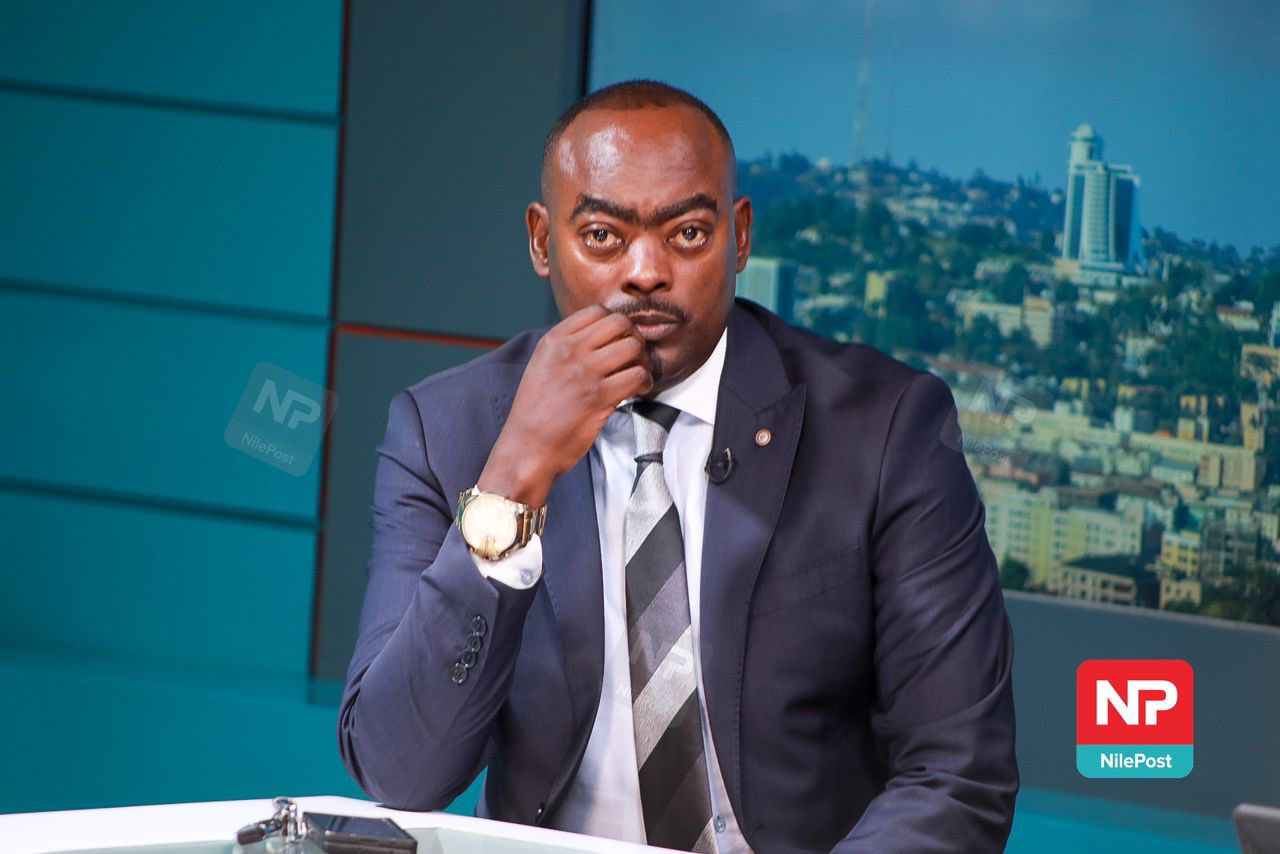
Former East African Legislative Assembly (EALA) Member of Parliament and Vice President of the Democratic Party (DP), Fred Mukasa Mbidde, has said Uganda’s political system is deeply flawed and has effectively collapsed, citing restrictions on political party participation and the continued dominance of individual merit over institutional democracy.
Speaking on NBS Television’s Morning Breeze on Monday, Mbidde argued that Uganda has failed to fully transition into a functional multiparty political system.
“This is an indicator that we have a convoluted political system. It is a sign that our political system has collapsed. We did not actually move away from individual merit. We have political parties that are not allowed to participate freely in politics,” Mbidde said.
His remarks come amid heightened political tension following the January 15, 2026 presidential and parliamentary elections, whose results have been strongly contested by opposition actors.
The leader of the National Unity Platform (NUP), Robert Kyagulanyi Ssentamu, popularly known as Bobi Wine, has rejected the results announced by the Electoral Commission, describing them as “fake” and alleging widespread ballot stuffing. However, Kyagulanyi has not publicly presented specific evidence to substantiate the claims.
Kyagulanyi has ruled out challenging the results in court, citing a lack of confidence in the independence and impartiality of the judiciary. Instead, he has urged his supporters to engage in peaceful street protests to express dissatisfaction with the electoral process.
On January 16, 2026, Kyagulanyi reportedly left his home in Magere and went into hiding, claiming that the military had raided his residence and that his life was in danger. Since then, he has continued to communicate with supporters through social media, alleging that state security agencies are targeting him. Government officials have consistently denied these claims, insisting that no security agency is pursuing the opposition leader.
According to official results released by the Electoral Commission, incumbent President Yoweri Kaguta Museveni of the ruling National Resistance Movement (NRM) was declared winner after securing 7,946,772 votes, representing 71.65 percent of the total valid votes cast. Kyagulanyi came second with 2,741,238 votes, accounting for 24.72 percent.
This is not the first time Kyagulanyi has disputed presidential election results. Following the 2021 elections, he filed a petition challenging President Museveni’s victory but later withdrew it, citing alleged bias and lack of judicial independence.
Despite Kyagulanyi’s decision not to seek judicial redress, former National Peasants Party (NPP) presidential candidate Robert Kasibante has filed a petition in the Supreme Court seeking to nullify Museveni’s victory.
Kasibante, who finished sixth in the election with 33,440 votes (0.30 percent), alleges widespread electoral malpractices, including violence, misuse of state resources, irregularities in the voters’ register, and undue influence over the Electoral Commission.
In response, President Museveni filed an answer and supporting affidavit sworn on January 25, 2026, asking the Supreme Court to dismiss the petition.
The President argues that the petition raises no valid complaint under Article 104 of the Constitution and the Presidential Elections Act, maintaining that the elections were conducted in full compliance with the law. He insists that any irregularities cited did not substantially affect the final outcome.
Museveni denied committing or authorising any electoral offences, including violence, intimidation, bribery or misuse of state resources. He also rejected claims of interference with the Electoral Commission, stating that it operated independently throughout the electoral process.
The President further defended the integrity of the voters’ register and biometric verification systems, noting that lawful alternative mechanisms were available to prevent voter disenfranchisement.
Museveni has asked the court to dismiss the petition with costs, insisting that his victory reflects “the free and lawful will of the Ugandan electorate.”
